The Last-Week List: Separate Must-Do Tasks from Nice-to-Haves
A calm final week comes from knowing what only the hosts can do, what someone else can own, and what can simply be left undone.
A calm final week comes from knowing what only the hosts can do, what someone else can own, and what can simply be left undone.
Details · 7 min read
The seating cards are stacked beside the kettle, a garment bag hangs from the bedroom door, and someone has just asked whether the favors need ribbon. In the last week before a wedding or celebration, small decisions can crowd out the few tasks that truly need the hosts. The fix is not to work faster. It is to sort the list by consequence and ownership, then give each item a clear next move.
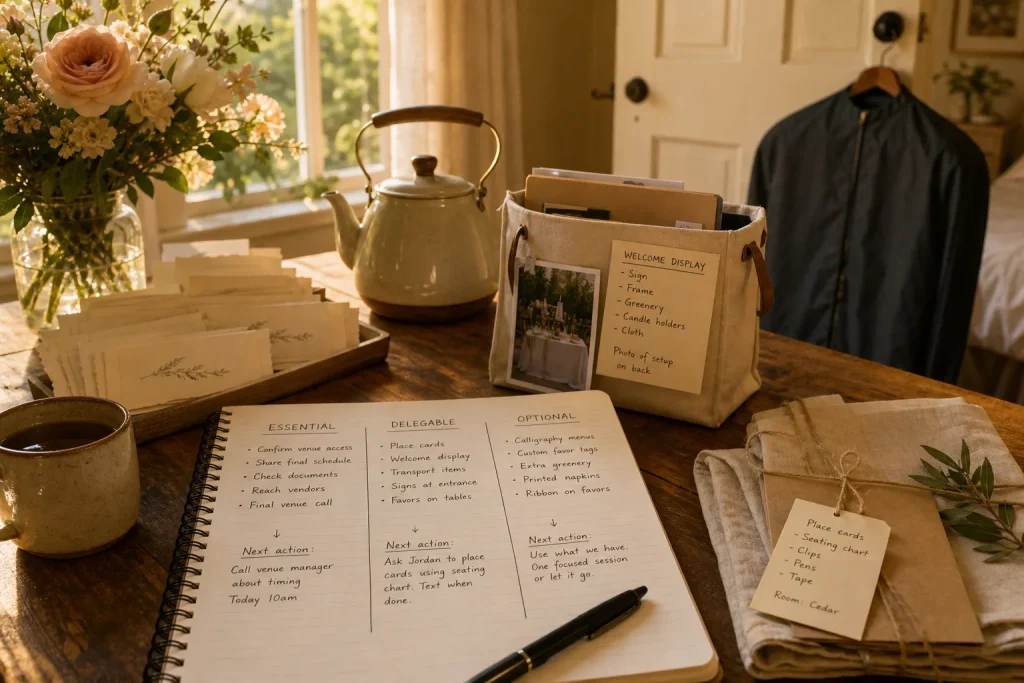
Use three categories: essential, delegable, and optional. Essential means the event would be unsafe, confusing, or substantially disrupted if the task stayed undone. Delegable means it matters, but a trusted person can complete it with a clear instruction. Optional means the event will still feel complete without it. A task can be important without belonging to the hosts.
When everything feels urgent, define what could actually go wrong
A long list tends to flatten priorities. Confirming the caterer, polishing a welcome sign, and finding a missing button may all sit in the same notebook, but they do not carry the same consequences. The usual cause is treating every unfinished detail as evidence of a problem rather than asking what happens if it remains unfinished.
Try a plain question beside each task: “If this is not done, what changes for someone on the day?” If the answer involves access, food, timing, safety, or a key personal commitment, keep it essential. If the answer is that a table will look a little less dressed, consider delegating it or dropping it.
Essential tasks often include confirming the venue’s access instructions, sharing the final schedule with the people who need it, checking that required documents are in order, and making sure a named person can reach the vendors. The exact list depends on the event. A decorative extra does not become essential just because it has already been purchased.
For each essential item, write the next action rather than the broad ambition. “Sort out music” is foggy. “Ask the DJ to confirm the first dance track and the cue for the final song” is actionable. Keep the list short enough that you can see the work, not just the anxiety around it.
When the hosts keep every task, name the knowledge only they hold
People often keep tasks because explaining them feels harder than doing them. That can make sense for choices tied to personal meaning: approving a ceremony reading, deciding who receives a private note, or making a final call about a family-sensitive seating arrangement. It makes less sense for carrying boxes, collecting a garment, or placing printed cards on a table.
Sort tasks by the information they require. If the decision depends on the couple’s preference, family context, or a promise they made, the hosts may need to own it. If it depends on a map, a phone number, or a labeled box, another person can usually take it.
Imagine the hosts have a welcome display to assemble, a batch of place cards to deliver, and a final conversation with the venue manager. They keep the venue call because it involves a decision about the event’s timing. They ask a friend to place the cards using a seating chart, and give a relative the welcome-display pieces in a labeled tote with a photo of the intended arrangement. The expected observable result is simple: the hosts make the decision only they can make, while the other tasks reach the venue without requiring them to supervise every hand movement.
Delegation works best when the task has an owner, a deadline, and a definition of done. “Can you help with the signs?” invites a follow-up chain. “Please put the two signs from the blue folder at the venue entrance and the room doorway when you arrive; text me when they’re in place” gives the helper enough to act.
When a helper says yes but the task still returns to you
Vague handoffs create hidden work. The host delegates a job, then fields a series of questions about supplies, placement, timing, or what to do if an item is missing. Usually the issue is not an unwilling helper; it is an assignment that transferred the labor but kept all the decisions with the host.
Before handing off a task, gather its materials and answer the likely questions. Put the relevant items together in a tote, envelope, or folder. Add a short note with the location, the person to contact, and any boundary the helper should respect. A labeled box of candles is more useful than a message saying “the candles are somewhere in the dining room.”
Give helpers room to solve small snags. If a welcome sign cannot be attached with the clips provided, can it lean safely against a wall instead? If the answer is clear, include it. If the substitute would change a meaningful or safety-related choice, tell the helper to call the venue coordinator or the named decision-maker.
Do not delegate a task to the person who is already responsible for a critical role at the event. The friend making a toast may not be the right person to manage vendor arrivals. The venue coordinator may be able to handle setup questions, but should not be expected to make personal decisions the hosts have not shared.
When optional details keep multiplying, choose what can disappear
Optional tasks often breed. A simple place card inspires a calligraphy flourish, which suggests a matching menu, which leads to a last-minute hunt for a special pen. The usual cause is a design idea being mistaken for a promise. If guests will not need an item to take part in the event, it may be safe to leave it unfinished.
Choose a few details that carry the feeling you want, then stop adding new ones. Perhaps the handwritten note to a grandparent matters more than a second layer of table décor. Perhaps a comfortable welcome area matters more than a custom tag on each favor. Keep the choices that feel personal or useful; let the rest go without replacing them.
What is not worth the effort in the final week? Reworking a decorative element that is already legible and in place, buying specialty supplies for a small visual adjustment, or adding a new favor that no one has requested. Those tasks can consume attention without changing anyone’s experience in a meaningful way.
If a task is optional but already underway, decide whether finishing it is genuinely easier than stopping. Set a clear boundary: use the materials on hand, give it one focused work session, or remove it from the plan. Do not let sunk effort turn a minor extra into a new obligation.
When the list grows faster than it shrinks, cap new work
Late arrivals are normal: a vendor asks for a final confirmation, or a family member raises a question that was not on the list. The trouble starts when each new request is added without a corresponding choice about time. A list without a limit becomes a collection of open loops.
Keep one shared list with three headings and a single owner next to each item. When something new appears, decide which category it belongs in before accepting it as work. If it is essential, name the person who can resolve it and the latest sensible time to act. If it is delegable, assign it with instructions. If it is optional, either schedule it within the time available or remove it.
Leave breathing room for ordinary interruptions: a delayed reply, a misplaced envelope, or a family conversation that takes longer than expected. A plan that fills every remaining hour is not a plan for a real household. Protect time for eating, sleep, travel, and being with one another, rather than treating those as rewards earned after every decorative task is done.
When the final day arrives, use a handoff instead of a new work session
The last day is a poor time to reopen decisions that have already been settled. Put the confirmed schedule, vendor contacts, venue instructions, and any essential personal items in one place. Tell the relevant helpers where to find them and who has authority to answer questions. A short handoff can prevent the hosts from becoming the only information desk.
Keep a small personal list for the things that genuinely require the hosts: bring the rings or other ceremony items, carry required documents, take medication, and make the agreed personal calls. The details vary, so check requirements with the venue and any relevant professional rather than assuming a familiar routine applies.
Then close the optional list. If a sign is still plain, a favor is still unwrapped, or a decorative idea never makes it out of the notebook, the gathering can still be generous and well cared for. The useful final question is not “What else could we finish?” It is “What must remain in our hands, and what can everyone else now carry?”